Franchising with the sharks

BY PETER JONES
NEWS EDITOR
The Founder, a recent movie starring Michael Keaton, tells the story of Ray Kroc, the consummate dealmaker who turned a fledgling southern California hamburger stand into fast food’s golden icon of American franchising.
Several decades and billions-of-burgers-sold later, Carolyn Miller got a job at McDonald’s—though she was more likely to consult on architecture than ask if you’d like fries with that.
“I learned so much about company structure and dotting I’s and crossing T’s,” she said of her years in Chicagoland’s corporate office.
Miller was caught between the pickles and special sauce when she was asked to take the lead in helping the chain set up satellite locations in Walmarts across the United States.
“They told me the margin for error is zero,” she recalled. “‘We want one person at the center of the hourglass aircraft-controlling everything.’ That still stands out as my favorite job ever. We opened almost 1,000 locations in five or six years.”
Miller would move to the Denver area in 1998 after McDonald’s made a major investment in Colorado-based Chipotle Mexican Grill. Ironically, the infusion of capital kept the fast-casual eatery out of the franchising game that McD’s had helped create.
Over the years, Miller plied her trade—and appetite—for such franchisors as Carl’s Jr., Red Robin and CiCi’s Pizza, developing expertise while consulting the industry’s players and newcomers on real estate, design, staffing, budgeting and marketing.
“Now they know what’s coming,” Miller said of those who listen. “They used to think it was just a light at the end of the tunnel. Now they know it’s attached to a freight train.”
She guides franchisors through the other side of the ominous tunnel too.
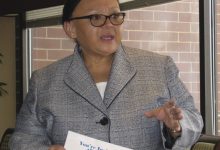
Much of Miller’s advice is condensed in the new Brick & Mortar Franchise Success: Know the Costs or Pay the Price. Her book is a sort of syllabus for the gamut of courses she leads at the National Franchise Institute, the Greenwood Village-based education center she founded in 2015. As dean for an adjunct “faculty” of attorneys, accountants, brokers, architects and engineers, Miller’s team strives to save wide-eyed franchisees from costly mistakes.
“If you think the time to hire an architect is after you’ve signed a lease, you’ve potentially lost a lot of money. It’s kind of like ready, fire, aim,” she said. “One mistake could cost $40,000 to $50,000. It could be $80,000. You need to know all that is involved.”
Miller says too many new franchisees are under the illusion that opening a new Supercuts is as easy as sweeping up the hair. She stresses that inking the document that gives one right to a name, business model, and supply chain is much more involved than turning a key.

For one thing, signing the lease is a strategic move.
“You could do everything else right, and if the location is wrong you can still fail,” Miller said.
Franchisees should also never let their “style” get in the way. The chief advantage of franchising is bucking trial and error, though not every franchisee learns that the easy way.
Four years ago, a Steak ‘n Shake owner operating in Centennial and Sheridan took a more circuitous route when he defied corporate pricing and wound up in court.
“I don’t think they’re being as honest with themselves as they should be,” Miller said of renegades. “The sophisticated brands that have been around for a while can see this coming.”
Ultimately, Miller says, the franchisor-franchisee marriage must be win-win.
“It’s about relationships,” she said. “If the franchisees are not successful, the franchisor is not successful either. A great franchisor needs to say, ‘Here’s the mission. Here’s why we’re doing it. Let me know what roadblocks I need to remove so you can keep moving forward.’”
Oftentimes a franchisor’s credibility is a huge part of that forward momentum—even in a service business like a dog-daycare center.
“Are you going to take your dog to Acme I-hope-I’m-going-to-see-my-dog-at-the-end-of-the-day? Or are you going to take them to a place where you know they have a reputation to protect? To do a business on your own is a huge, huge undertaking,” Miller said.
Those who do it anyway and grow into franchisable concepts are lucky.
“Maybe it’s a great product. Maybe it’s in the right place at the right time,” said Miller, who will consider such issues as she mulls whether to franchise the National Franchise Institute.
“People have asked me that,” she said. “At this point, I want to get strong in where we are here. Would we have other offices located in different cities? Potentially.”