


SBA loans available – but do your homework
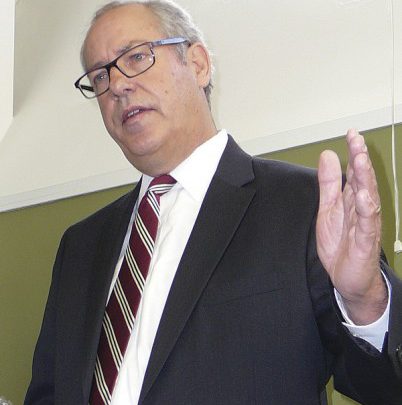
Englewood Chamber lends an ear to agency rep
By Peter Jones
Most people are at least vaguely aware of the U.S. Small Business Administration’s government-backed loans to emerging entrepreneurs, but fewer know about the no-cost educational programs that the federal agency offers to small employers.
“Don’t go out there and hire a consultant when you can get those for free,” said Bob Martin, a longtime banker who serves as an SBA lender-relations specialist.
Martin was a guest speaker last week for the Greater Englewood Chamber of Commerce, in anticipation of an upcoming SBA Emerging Leaders program. The initiative is an intensive seven-month training course that focuses on the professional development of executives at second-stage businesses, or those that have passed the startup stage and are poised for growth.
Businesses must meet certain financial and employment qualifications to be eligible for the 100 hours of in-person training that some liken to a mini-MBA program.
Martin told the room of about 15 businesspeople at Englewood’s Community Banks of Colorado on Feb. 9 that he is amazed by the lack of financial literacy among certain entrepreneurs who visit his office seeking SBA loans.
“I’m shocked at some of the people that come in and they want a grant for a startup. There are no grants,” he said.
Other business owners have been known to put the cart well before the horse when it came to spending the money they thought they would receive from the government. Martin recalled one woman who signed a five-year lease before she ever walked into an SBA office.
“We were not able to do [the loan]. Bank B was not able to do it. Bank C was not able to do it. She got stuck on a five-year lease. Every time I walked by an empty building, she was paying rent on it. Go to your lender first. That’s what you do,” the SBA specialist said.
Martin says when entrepreneurs know what they are doing, the government-backed loans—with their higher amounts, longer terms and lower interest rates—can be a win-win arrangement for everyone involved.
“It’s good for the borrower. For the banker, of course, it reduces the risk because they get a partial guarantee, anywhere from 50 percent to 90 percent,” he said.
That is not to say the SBA would back a loan for just anybody. A solid business plan [even for existing companies], a personal investment of 20-30 percent of needed funds, and a solid footing in the given industry are among the factors that the federal agency looks for when thumbing through loan applications.
“I’ve seen a lot of startups where the guy retires from Hewlett-Packard and now he wants to open up a cupcake store,” Martin said. “The guy’s probably pretty smart, but does he know anything about running a retail store?”
The SBA loan process should take four to six weeks, Martin says, but when it takes longer, it is often because the borrower fails to provide all the necessary documents and information.
“If I give you a list of 10 things, generally I get four out of the 10,” he said.
Some businesses are unlikely to get SBA loans at all—examples being those that favor a particular religion, gambling establishments and businesses catering to only one gender. [A Curves franchise once installed a men’s room to get around that issue, Martin said.]
And despite Congress recently prohibiting the Department of Justice from interfering with medical-marijuana businesses in states where they are legal, Martin said such operations would still be disqualified from SBA loans due to continuing federal prohibitions. He recalled an application from a strip club in Boulder that did not cut the mustard either.
“The cash flow was huge. [I went to check on it and] my manager was wondering why I was doing so many site visits,” Martin said with a laugh.
For more information, visit www.sba.gov.